When we first feature a company, it’s usually the technology that catches our attention.
Months later, we find ourselves looking beyond the technology and focusing on the impact it creates.
Because the real question is this:
Is this technology actually improving people’s lives?
When we first wrote about Protex AI, we described the Dublin-based startup as a company reimagining workplace safety through computer vision, transforming existing on-site cameras into intelligent safety systems capable of identifying hazards in real time.
Today, the story feels much bigger.
Because for decades, workplace safety has largely worked the same way.
An incident happened.
Reports were written.
Root causes were investigated.
New procedures were introduced.
In other words, the system was mostly built to react to what had already gone wrong.
Which naturally leads to another question:
Can we identify a workplace accident before it happens?
These days, one of the strongest answers to that question is Protex Copilot.
This GenAI-powered tool analyses visual data and provides safety teams with actionable insights.
Because the challenge is no longer simply about monitoring camera footage.
It’s about understanding what is happening.
And recommending what should happen next.
Marks & Spencer offered a glimpse of what this looks like in practice, reporting an 80% reduction in incident rates and an increase in near-miss reporting within the first 10 weeks of deploying Protex AI at its Castle Donington distribution centre.
In other words, Protex AI is evolving from a system that detects risks into an assistant that helps safety teams make better decisions.
And this shift raises another important question:
Can a technology designed to protect people also protect their privacy?
Protex AI’s Privacy-First Safety AI initiative challenges the idea that workplace safety and employee privacy must exist in opposition to one another.
As CEO Dan Hobbs put it:
“Safety AI shouldn’t be about watching people; it should be about protecting them.”
The recognition Protex AI has received suggests this approach is resonating. The company was recognised for market-leading functionality in Verdantix’s 2026 report, ranked #21 on the Sifted 100 UK & Ireland 2026 list with 313% growth, and continues to accelerate internationally following its $36 million Series B funding round.
But perhaps the most interesting part of this story is this:
Seeing Protex AI simply as a company building smarter cameras may miss the bigger picture.
Because what they’re ultimately trying to change isn’t the camera.
It’s the way we think about workplace safety.
Just as we did when we first featured them, we continue to follow Protex AI with great interest today.
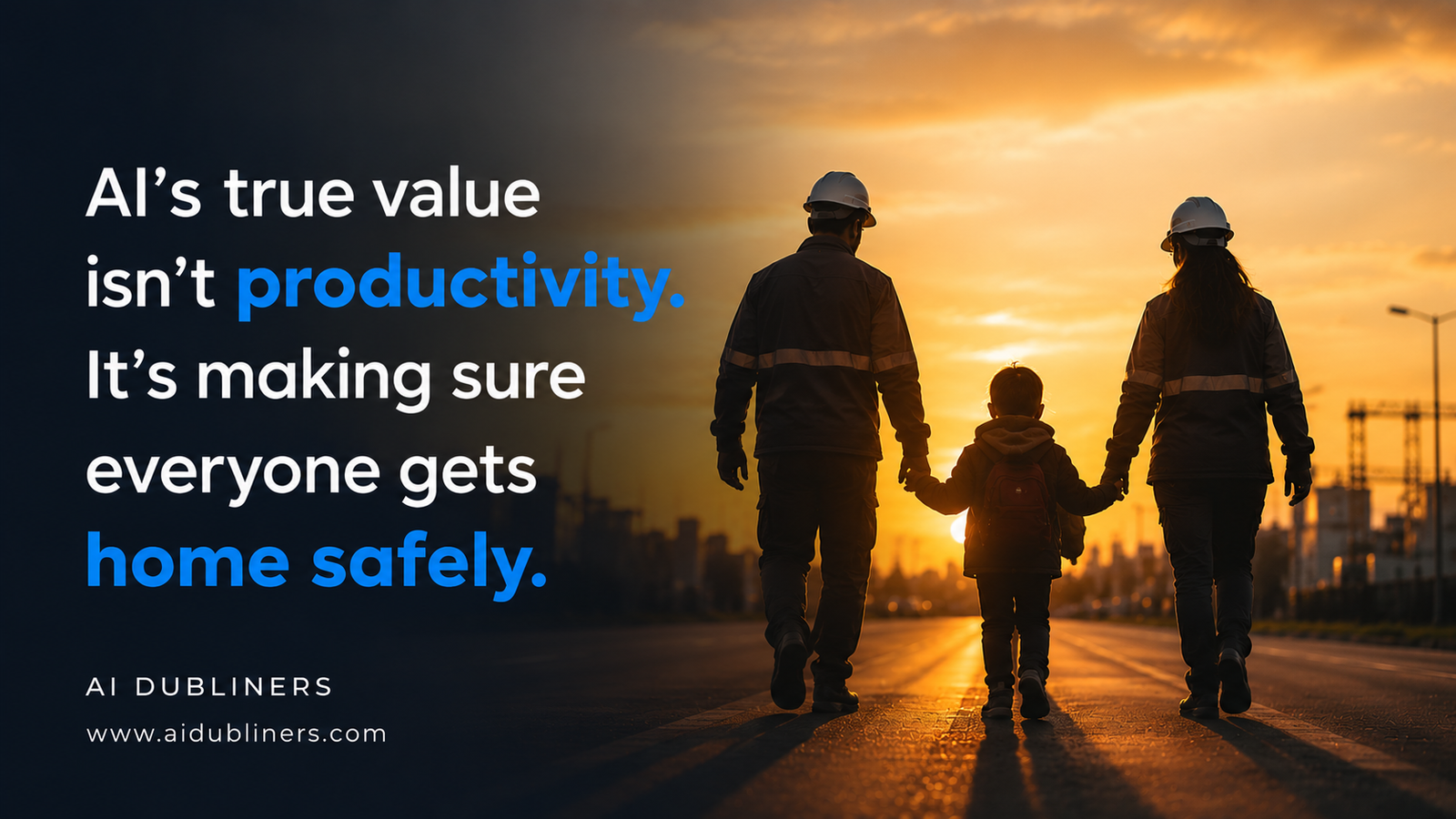
Because sometimes the value of AI isn’t measured in productivity.
It’s measured in the number of people who make it home safely.