Everyone talks about AI in meetings, but you’re just listening.
What does it feel like to watch a technology from the outside… without actually using it?
Where do people fit into AI transformation?
This is exactly the question a Dublin-based startup that caught our attention is tackling:
Familiar Futures — led by Ashley Nichols and Ricarda Pietschmann.
For them, the question isn’t whether AI will transform organisations.
It already is.
The real question is:
👉 Where do people fit into that transformation?
The real challenge behind AI adoption
The reality on the ground is clear:
- Employees don’t know how to use AI
- Some fear it might replace their jobs
- Many still ask, “What does this actually do for me?”
And the result?
The technology is there.
The investment is there.
But the usage isn’t.
Key insights from Familiar Futures’ research
Familiar Futures’ research reflects this gap:
- 52% report lacking technical expertise
- 45% cite employee resistance and fear as key barriers
AI is not about replacing humans — it’s about working with them
That’s why their approach is different:
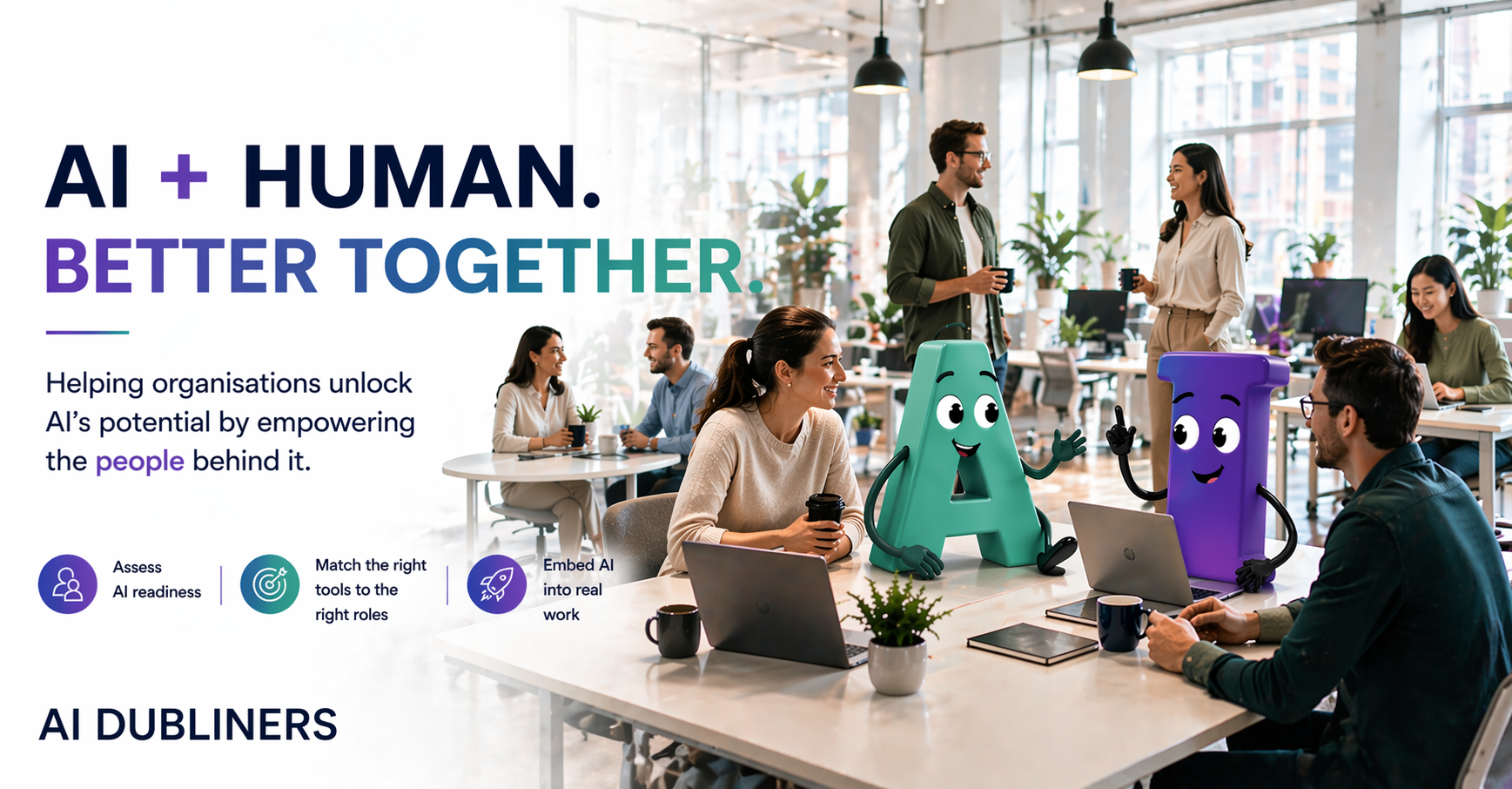
This isn’t AI vs humans.
It’s AI + humans.
In other words:
👉 The right tools
👉 The right people
👉 The right context
How Familiar Futures approaches AI adoption
Familiar Futures focuses on:
- Benchmarking AI readiness at the individual level
- Matching the right tools to the right roles
- Designing adoption journeys that integrate AI into real work
AI adoption is a people problem
And maybe the most important insight:
AI adoption isn’t just a technology challenge —
it’s a behaviour and community challenge.
A growing movement in Dublin
This shift is part of a broader movement emerging in Dublin.
Events like Dublin Tech Week highlight this transformation:
AI is no longer just a technology conversation —
it’s a human and organisational one.
Final thought
At AI Dubliners, we’re seeing this more clearly every day:
The winners won’t be those who build the best models…
but those who enable people to work with AI effectively.