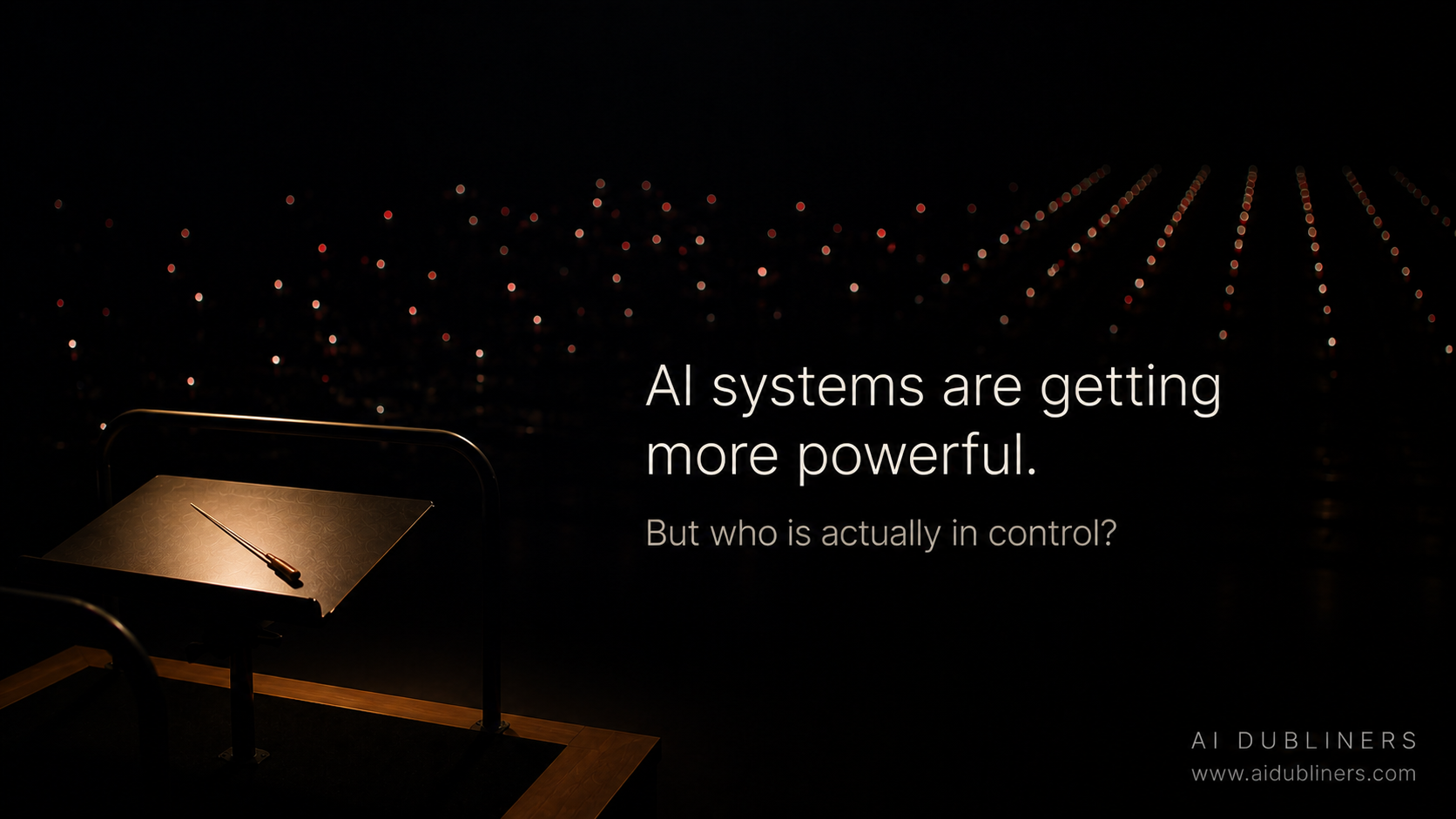
AI systems are getting more powerful.
But in many real-world environments, the missing layer is no longer intelligence. It is control.
Over the past year, companies have raced to build with AI through agents, automations and increasingly complex workflows. Yet as these systems move into production, a different question is becoming harder to ignore: who is actually managing all of this?
That is where AI orchestration begins to matter.
The control layer is becoming the story
For a long time, the conversation around AI focused on what models could generate.
Now the pressure is shifting.
As AI systems become more deeply embedded in products and workflows, businesses increasingly need answers to practical questions around security, manageability, reliability and production performance.
In that context, orchestration is no longer a technical detail. It is becoming part of the product itself.
Where RaptorLabs fits
Dublin-based RaptorLabs appears to be operating in that emerging space.
Its positioning suggests a focus on agentic systems and fast movement from concept to production. But what makes the company more interesting is not only speed. It is the implication behind that positioning.
The signal here is not simply that AI can do more.
It is that AI systems increasingly need to be structured, governed and made durable enough for real operating environments.
That is a meaningful shift.
From capability to manageability
The core question in AI is changing.
It is no longer only:
- does it work?
- can it generate output?
- can it automate a task?
It is increasingly becoming:
- is it secure?
- is it manageable?
- can it survive in production?
- can teams actually control it over time?
This is why orchestration matters so much. As agents and automations grow more capable, the systems around them become just as important as the models themselves.
A wider signal in Dublin’s AI ecosystem
That is what makes companies like RaptorLabs worth watching.
They reflect a broader move in Dublin’s AI ecosystem, where the conversation is shifting from tools to systems, and from experimentation to operational control. The next phase of AI will not be defined only by the power of the model, but by the quality of the infrastructure, governance and orchestration built around it.
At AI Dubliners, we pay attention to these signals closely.
Because in Dublin, AI is no longer only being built.
It is increasingly being managed in the real world.