While researching how Dublin-based Oraion is turning data into proactive insights, I found myself thinking about a bigger question: will enterprises still need dashboards in the future?
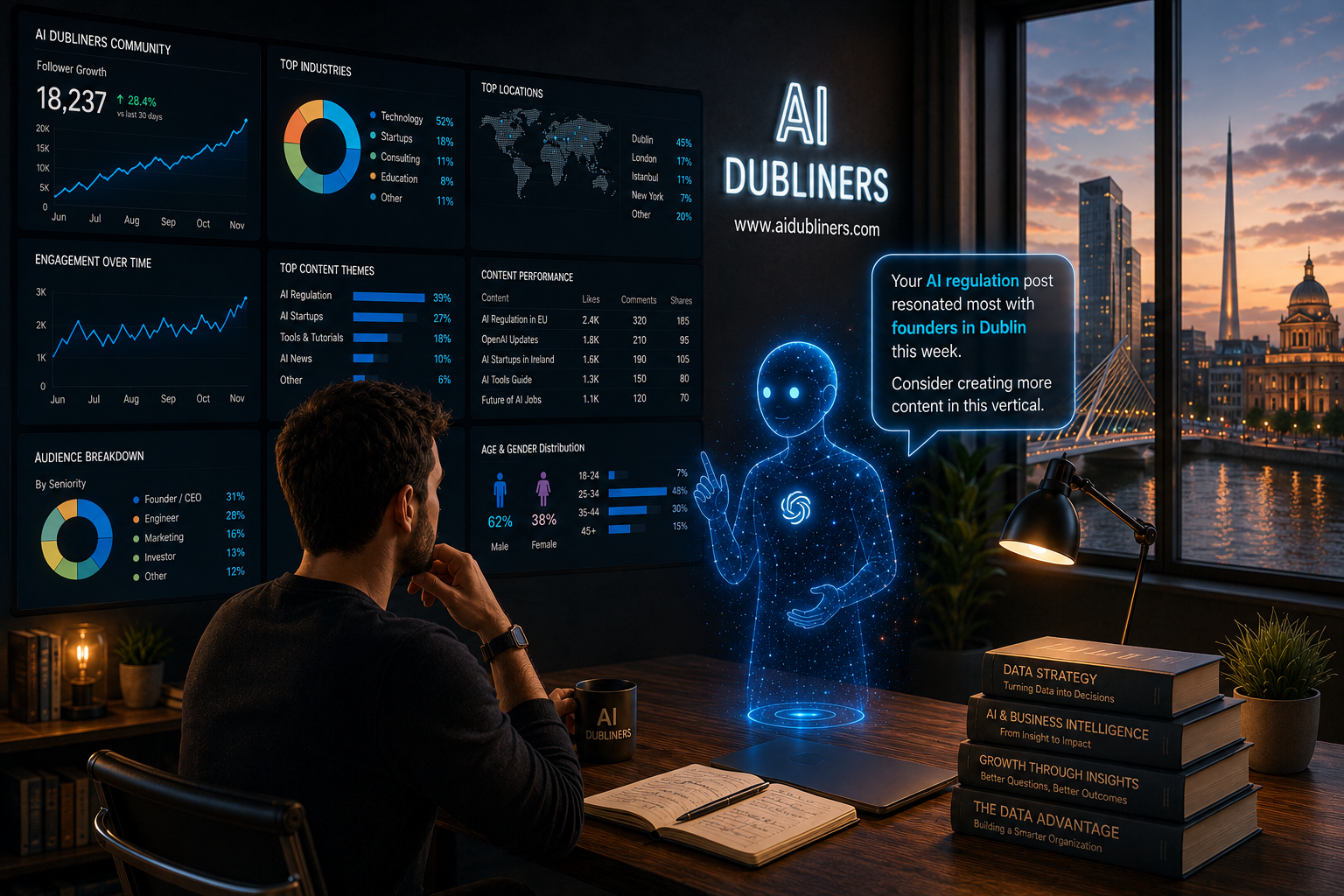
Then I started thinking about this question through the lens of my own venture, AI Dubliners, the community I’ve been building for over a year. As the community has grown, I’ve become increasingly curious about the people behind the numbers. Who follows the page? Which industries do they work in? Are they founders, engineers, marketers, or investors? Which topics generate the most interest?
The answers are all there somewhere, hidden inside those complex dashboards running in the background. And it reminded me why dashboards have been considered so critical for businesses for so many years.
But then I noticed something.
When I open a dashboard, I’m rarely interested in the charts themselves. What I actually want is a conversation with the data.
While drinking my morning coffee, I’d rather have an AI assistant tell me: “AI founders in Dublin engaged most with your AI regulation post this week. You should build your next piece of content around that topic.” In other words, the answers I really want are: “Why is this audience growing?” “Which content is creating the strongest response?” “What patterns am I missing?”
Of course, there’s an important nuance here. Such an assistant can only be as accurate as the data beneath it. Otherwise, it will confidently give you the wrong answer. In fact, according to dbt Labs’ 2025 State of Analytics Engineering report, 80% of data professionals now use AI in their daily workflows, yet 57% still spend most of their time cleaning and preparing data. The magic isn’t in the conversation itself. It’s in the invisible data layer that makes the conversation possible.
The real transformation isn’t that AI can generate colourful dashboards in seconds. The real transformation is that users may no longer need to learn how to read them. But as one skill becomes less important, another becomes more valuable. The differentiator is no longer reading the right chart. It’s asking the right question.
For years, software helped us see data. Now AI is beginning to help us understand it. And this isn’t just a prediction. Companies like Oraion, emerging from Dublin’s AI ecosystem, are already building that direct path from raw data to clear decisions.
Perhaps businesses never truly needed those complex dashboards. What they really needed were the insights those dashboards were supposed to produce. It increasingly seems that the future of business intelligence is not about creating more charts. It’s about asking better questions.


