We talk almost every day about how artificial intelligence is changing the way we work.
Reports are prepared. Research is done. Code is written. Content is created. Meetings are summarised and emails are drafted.
Weeks become days. Hours become minutes.
Great.
But one simple question keeps coming to mind:
What are we actually doing with all the time we save with AI?
Does working faster mean working less?
There is strong evidence that AI tools can accelerate certain tasks.
In an experiment involving 444 professionals, MIT researchers found that people using ChatGPT completed specific writing tasks 40% faster on average. The quality of their work also increased by 18%.
But completing a task faster does not automatically make the working day shorter.
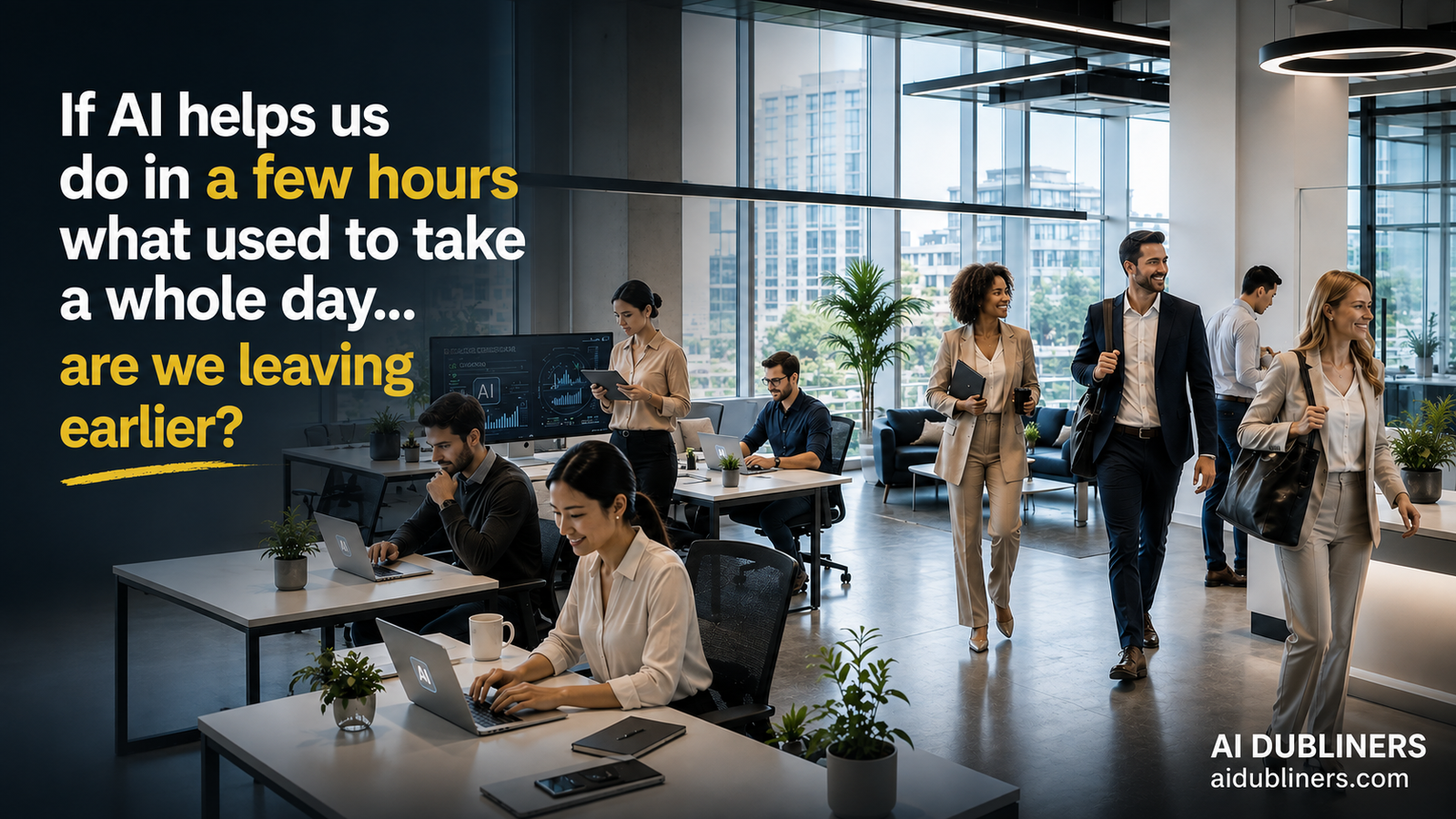
If AI helps us finish eight hours of work in two, are the remaining six hours really ours?
Are we going home earlier? Learning something new? Moving towards more creative work? Or are we simply being given more tasks?
Saved time can become new expectations
Higher productivity may not always create more free time for employees.
Once work is completed with AI, targets may rise, deadlines may become shorter and the newly available space may be filled with additional tasks. Instead of freeing time, technology can increase the intensity of work.
The amount of work is not the only thing that can change. Its structure can change too.
A Harvard Business School study of more than 187,000 software developers found that access to GitHub Copilot increased core coding activity by 12% while reducing project management and administrative work by 25%. At the same time, the number of people developers collaborated with fell by 79%.
AI is not only saving time. It is also changing how we use that time and who we work with.
The real question is how we share the time
Companies may need to ask more than, “How much more work can we produce with AI?”
We also need to discuss:
- Can the time saved be used for learning and creative work?
- How will employees benefit from higher productivity?
- Will working faster also mean working better?
- Or will every gain become a new performance expectation?
AI can save us time. But technology does not decide who that time belongs to.
Workplace culture, managers and the rules created with employees will determine that.
Perhaps the real productivity question in the age of AI is not how many more tasks we can fit into one day.
It is what kind of working life we choose to build with the time we save.


