We often talk about AI investments, new job opportunities and the growth of technology companies in Ireland.
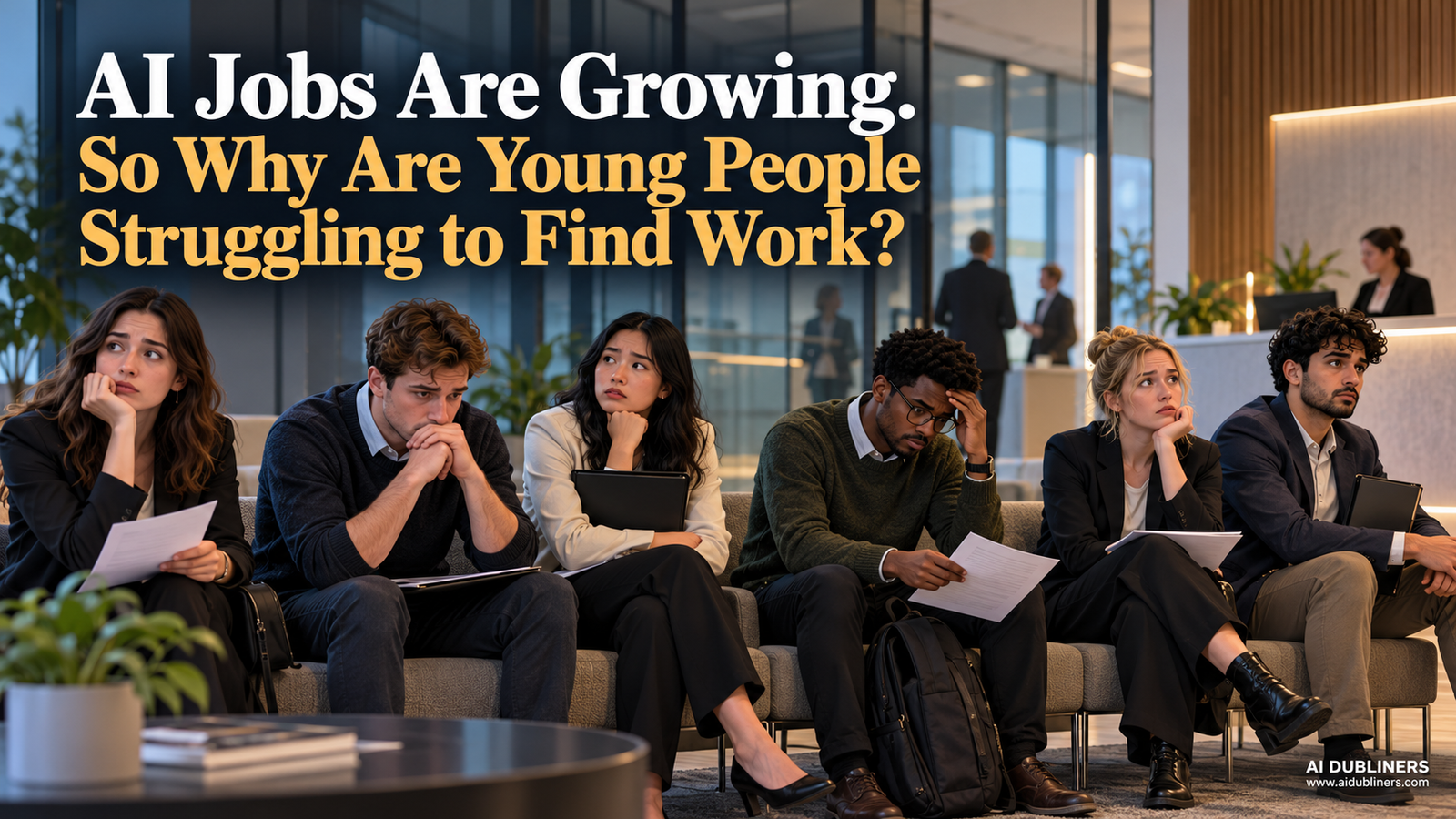
But while all this is happening, how much attention are we paying to the difficulties young people face when trying to find work?
As we approach the end of the year, I wanted to take a closer look at the Central Statistics Office’s (CSO) unemployment figures for September 2026.
According to the CSO figures published on 30 September, Ireland’s overall unemployment rate remained at 5%, while the rate among young people aged 15 to 24 reached 12.5%.
Of course, these figures alone don’t explain why young people are struggling to find work. They are also monthly estimates that may be revised.
But when we look at them alongside another change taking place in recruitment, an interesting picture begins to emerge.
AI Is Changing How Companies Hire
According to an IrishJobs survey published in September 2025, 78% of recruitment professionals in Ireland use AI at some stage of their hiring process.
Some 23% use it to assess applications and CVs.
Yet 32% of recruiters surveyed said they don’t trust AI to make fair or accurate decisions.
This is the part that particularly caught my attention.
On one hand, we’re developing new technologies to make recruitment faster and more efficient. On the other, there are still serious questions about how accurately these technologies evaluate candidates.
And it’s not just about which skills appear on someone’s CV.
There are people changing careers, moving between industries or coming from less traditional educational and professional backgrounds.
How well can automated systems recognise their real potential?
What Does Ireland’s HR and AI Ecosystem Think?
What’s interesting is that similar questions are being raised within Ireland’s HR community.
Insight HR’s Ireland’s HR Landscape 2026 report explores concerns around bias, trust and human oversight in AI-assisted recruitment.
The professional perspectives included in the report highlight the risk that poorly managed systems could overlook qualified candidates or reinforce existing biases.
These are concerns raised by HR professionals, not measured rates of candidates being incorrectly rejected.
Dublin-based HR technology company Workhuman has also explored similar questions in its discussions about AI and the role of humanity in HR.
In a 2024 Workhuman article, KeyAnna Schmiedl, the company’s Chief Human Resource Officer at the time, highlighted the importance of meaningful transparency and continuous oversight in the use of AI.
So the conversation isn’t only about how quickly AI can work. It’s also about how decisions affecting people are made.
Meanwhile, IrishJobs’ 2026 hiring research found that 47% of employers surveyed had reduced entry-level positions.
The research links this reduction specifically to the increase in the National Living Wage. So it wouldn’t be accurate to attribute it directly to AI. However, the same report notes that rising labour costs and advances in AI are prompting many employers to focus on experienced talent.
Still, when we think about young people and career changers trying to enter the job market, another question comes to mind:
If companies increasingly expect experience, where are people supposed to gain it?
Perhaps We’re Measuring Success the Wrong Way
At AI Dubliners, when I follow emerging AI companies, products and technological developments, I usually focus on the problems these technologies are trying to solve.
But sometimes I think we need to ask another question.
If a technology solves a problem faster but creates new problems along the way, how should we measure its success?
AI is not necessarily the reason behind youth unemployment. At least, we don’t have evidence to make that claim.
But as AI becomes more common in recruitment, we have good reasons to discuss how we can make sure candidates are evaluated fairly.
After all, an AI-powered recruitment system might review hundreds of applications in minutes. But if it overlooks the right candidate, what is that speed really worth?
Perhaps the goal shouldn’t simply be to make hiring faster, but to make sure we don’t overlook the right people.
I’d be particularly interested to hear what HR and AI professionals across Ireland think about this.


