When we first featured CaliberAI six months ago, conversations around AI and content risk were still relatively limited.
Today, the picture looks very different.
Generative AI has fundamentally changed the speed and scale of content production.
Publishers. Platforms. Brands. And increasingly, AI systems themselves.
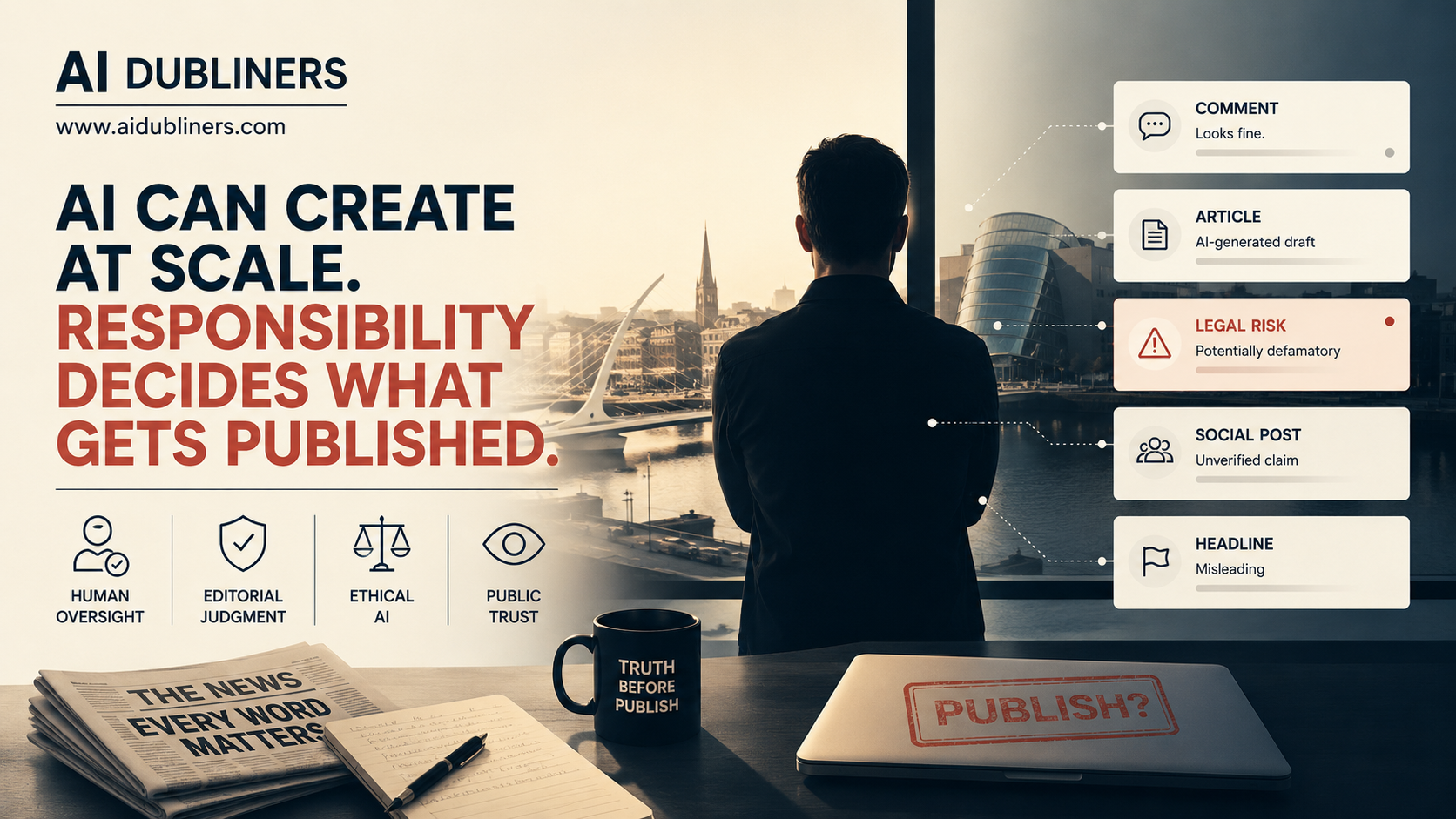
Producing content is no longer the challenge. The real challenge is managing content risk at scale.
Where an editor once reviewed a handful of pieces in a day, a single team can now produce hundreds of articles, headlines, comments, and social media posts.
AI hasn’t just accelerated content creation. It has also amplified the scale of mistakes.
And that raises an important question: Before content reaches the public, who assesses the risks?
This is where Dublin-based CaliberAI stands out.
The founding team alone tells an interesting story.
Neil Brady is an investigative journalist who worked at Storyful and The Guardian. Conor Brady spent 16 years as Editor of The Irish Times before going on to serve as a Commissioner at Ireland’s Garda Ombudsman Commission.
This is not a company built on technological excitement alone. It is a company built on responsibility, accountability, and public trust.
CaliberAI’s platform analyses content before it is published, helping to identify language that may be defamatory, harmful, or legally risky.
The goal is not to replace editors. The goal is to provide greater visibility before potential harm occurs.
The advisory network around the company is equally notable.
Among them: Alan Rusbridger, former Editor-in-Chief of The Guardian; Dave Willner, one of the architects of Facebook’s first content policies and former Head of Trust and Safety at OpenAI; and Onora O’Neill, philosopher, ethicist, and member of the House of Lords.
As Neil Brady wrote in January 2025, the accountability frameworks governing the internet have not kept pace with the speed at which communication technology has transformed.
As AI continues to reshape how information is created and distributed, that conversation becomes more important with each passing day.
Today, many AI companies are focused on one question: “What can AI produce?”
CaliberAI is pursuing a different one: “What should be published?”
The gap between those two questions may matter more than ever in the years ahead.
As AI Dubliners, we can say this: there is no shortage of companies working to make AI faster, cheaper, and more powerful. CaliberAI is focused on an equally important question: how do we make AI more responsible?
Named among Dublin’s most exciting startups by WIRED, CaliberAI brings a journalism perspective to one of AI’s most important challenges — one that may only grow more valuable with time.