Building AI Dubliners has been more than a content project. It has also been a hands-on lesson in what it really means to work with AI systems day after day.
I do not come from a technical background, so while building the AI Dubliners website, I have relied heavily on AI tools to help shape the structure, content, and problem-solving process. Like many people, I have started using these systems not only as tools, but as collaborators.
And that is exactly why trust matters so much.
At one stage of the website build, after a growing volume of messages and files, I was prompted to upgrade my plan so I could continue the work. I upgraded immediately because I wanted to keep moving. But soon after, the project context I had been relying on was no longer there.
The financial side was not the real issue. The bigger issue was trust.
When people use AI to support serious work, they are not only looking for output. They are looking for continuity, reliability, and confidence that the system will still be there when the work becomes important.
That experience also reinforced something else I have been noticing more often while working with AI.
These systems can sound highly confident, even when the reality is far more uncertain. They often say that something is possible, straightforward, or easy to fix. But in practice, the actual work can turn out to be slower, messier, and much more complex than the response initially suggests.
That gap matters.
Because the cost is not just technical. It is emotional and operational too. It affects time, energy, motivation, and confidence in the process itself.
There is a lot of discussion about AI becoming smarter than humans. But in real workflows, intelligence alone is not enough. Systems also need continuity, context, dependability, and the ability to support an outcome from beginning to end.
That is one reason many companies still remain cautious.
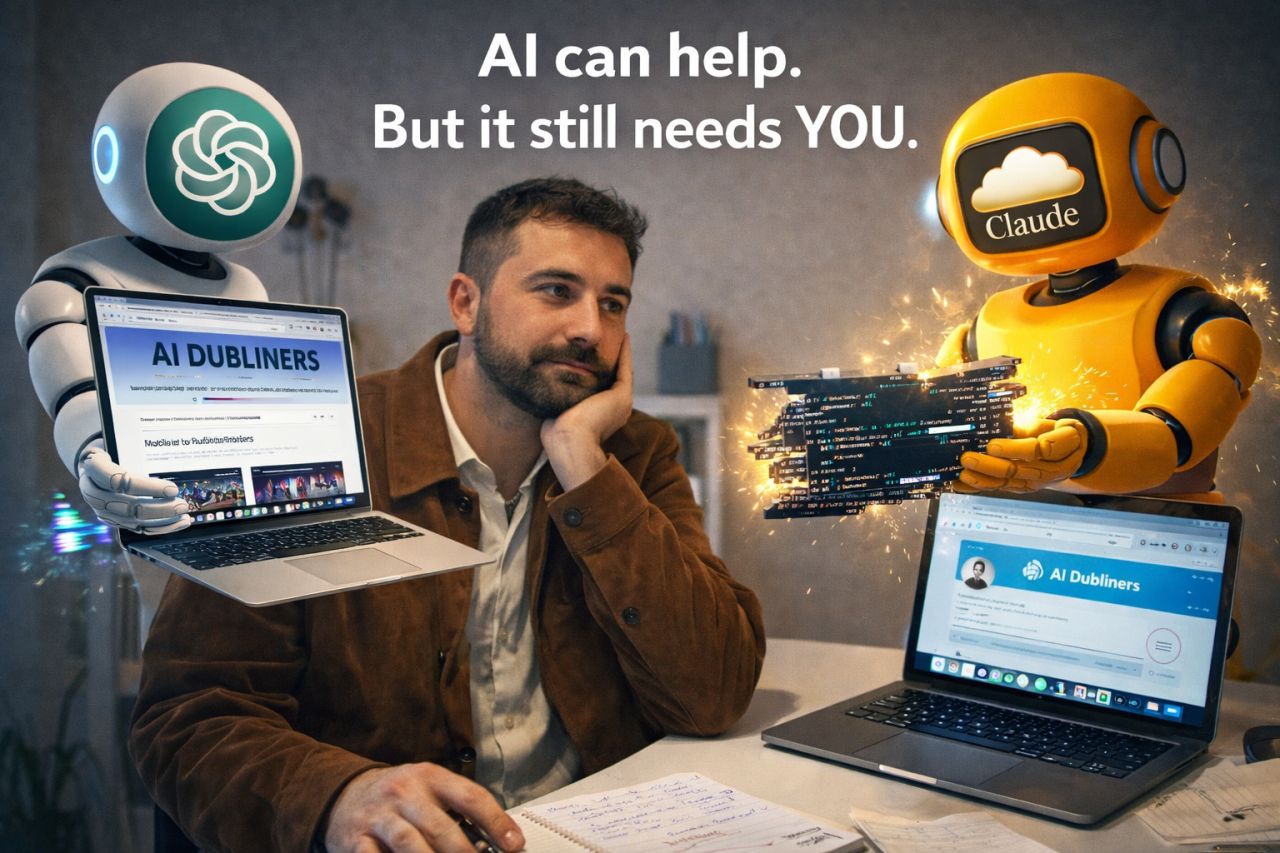
AI can be extremely helpful. It can accelerate learning, unblock progress, and make ambitious projects more accessible. But it still works best when a human stays in control, keeps track of the direction, and treats the system as powerful support rather than dependable certainty.
For me, this has not reduced the excitement of building AI Dubliners. If anything, it has made the journey more real.
Because this is where the real conversation around AI begins, not only in what it can generate, but in whether it can be trusted as part of meaningful work.


