Is AI Becoming the Default Experience Across Digital Platforms?
One of the AI companies I follow is Glitch. I often find CEO Aisling Browne’s posts thought provoking, especially when it comes to AI’s impact on marketing and brand strategy.
A recent post about Google Ads made me think about a broader shift.
Following Google’s July 1 update to its Google Ads Terms, the scope for AI generated and AI modified ad headlines and other advertising content expanded. But the most interesting point was not the technical change itself.
It was the bigger question behind it.
Are brands gradually handing over their voice to the AI systems built into the platforms they use?
As I reflected on that idea, another question came to mind.
Is this really just a Google story?
Over the past two years, almost every major technology company has been moving in the same direction.
AI is no longer simply another feature.
It is becoming the default way digital products work.
We can already see this across many platforms.
Microsoft is embedding Copilot into Word, Excel and Outlook as part of the everyday writing experience.
LinkedIn offers AI assistance for profiles, messages and content creation.
Google Workspace integrates AI into Gmail and Docs to help users write and organise their work.
Canva is evolving from a design tool into a platform where AI actively suggests and creates designs.
GitHub Copilot is making AI assisted coding a standard part of software development.
And these are only a few examples.
Adobe, Shopify, Notion, Salesforce and many others are following the same path.
No one is forcing people to use AI.
But the design of these products increasingly sends the same message:
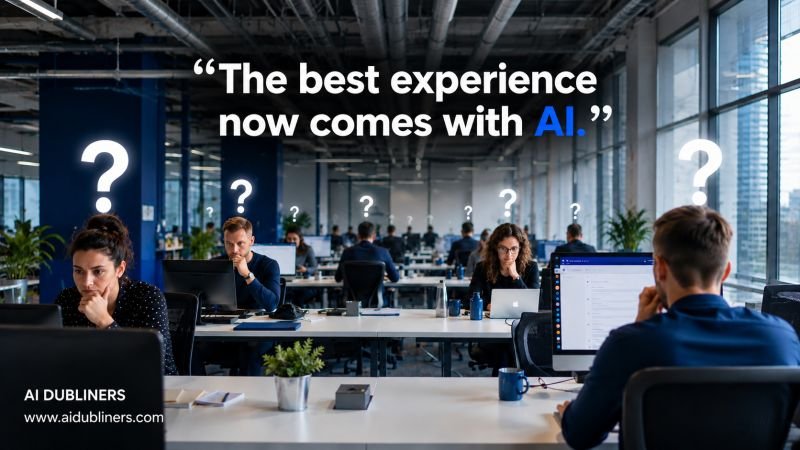
The best experience now comes with AI.
That is where the more interesting discussion begins.
Is this happening because AI consistently delivers better outcomes for users?
Or are technology companies gradually making AI the new default standard for digital products?
There may also be a longer term consequence.
As AI begins generating millions of emails, presentations, advertisements and designs, will brands and individuals develop stronger, more distinctive voices?
Or will everything slowly start to sound the same?
Perhaps the question we should be asking is no longer how intelligent AI has become.
Instead, is AI quietly moving from being an optional feature to becoming the default operating model of the digital world?

As AI Job Opportunities Grow in Ireland, Why Are Young People Struggling to Find Work?
We often talk about AI investments, new job opportunities and the growth of technology companies

