
The AI world moves fast, and with that speed comes a constant stream of new terms, roles and “future professions.”
That is exactly why it makes sense to pause before accepting every new concept too quickly.
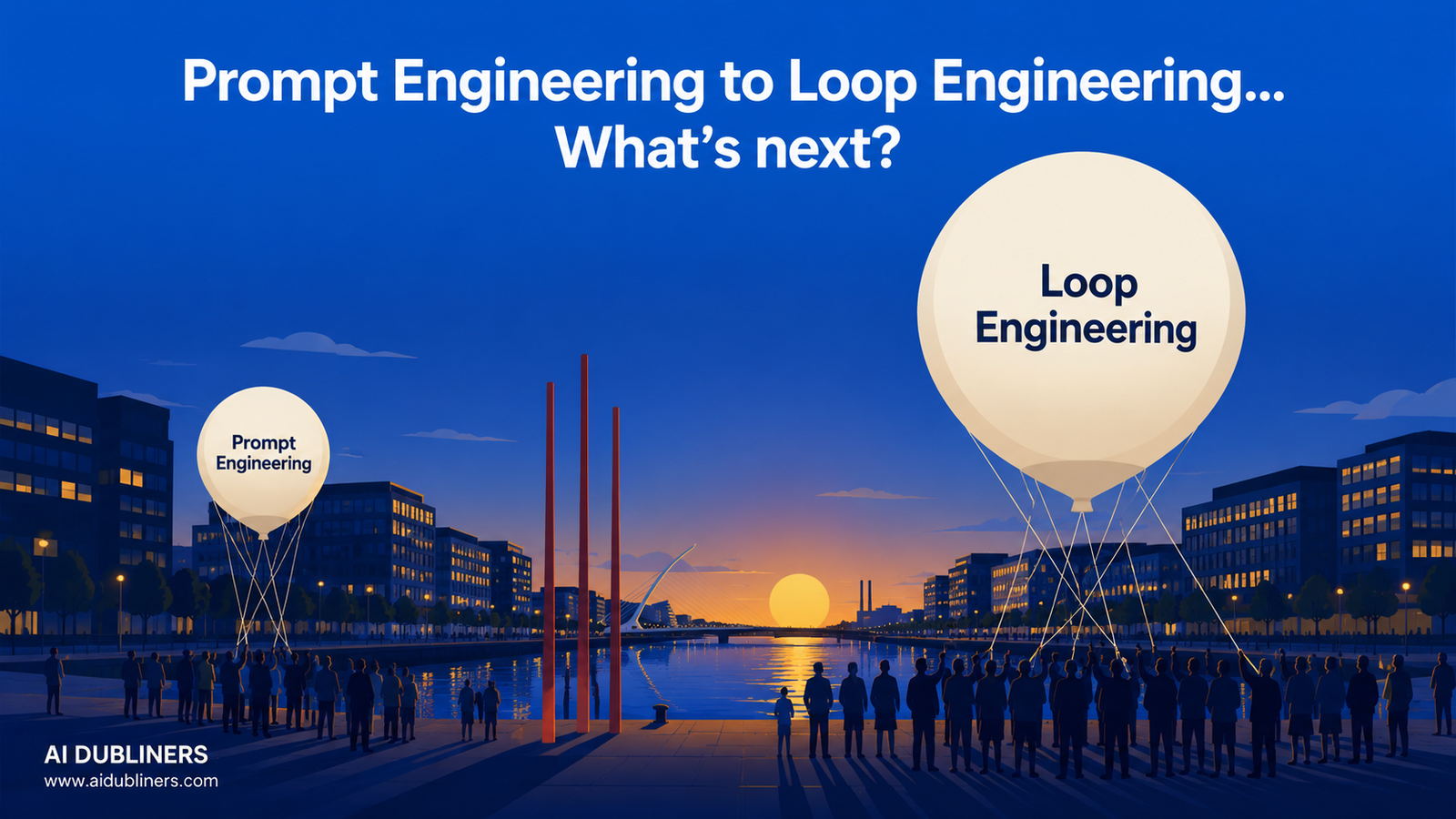
One of the latest terms attracting attention is Loop Engineering.
The phrase started gaining traction in June 2026, especially after Addy Osmani published a piece exploring the idea and referencing observations from Boris Cherny, creator of Claude Code, and developer Peter Steinberger. The concept is still very new, but the reason people are paying attention is clear.
It points to a real shift in how AI systems are being used.
What is Loop Engineering?
For a while, much of the AI conversation focused on Prompt Engineering.
The central question was simple: how do you write the best prompt to get the best result?
But with the rise of long-running agents, that question is starting to evolve.
Instead of asking how to write one perfect prompt, the more relevant question may now be:
- who is running the AI agent
- how is the agent being orchestrated
- what rules guide its decisions
- when does it stop
- how are its results checked and improved
This is the space where Loop Engineering begins.
As described by practitioners around Claude Code, the work is no longer about manually prompting an agent turn by turn. It is about designing loops that generate prompts, evaluate outputs, decide the next action and determine when a task is complete.
That is a meaningful change.
Why does this matter?
If this framing holds, success in the AI era may become less about writing the perfect sentence and more about designing a system that can:
- think through a task
- iterate intelligently
- verify its own progress
- stop at the right moment
That makes the work more structural and more operational.
It also helps explain why some people see Loop Engineering as a more useful concept than Prompt Engineering for the agent era.
Is Loop Engineering a real new field?
That is still unclear.
The term is extremely new, and it may or may not last. Some people already argue that it is simply a while loop with better marketing. Others believe it captures a genuine evolution in how AI work is being designed.
At this point, both views are worth taking seriously.
What seems most important is not the label itself, but the shift underneath it. AI systems are becoming more autonomous. And as that happens, the leverage point moves from single prompts to systems, loops and orchestration.
AI Dubliners perspective
At AI Dubliners, this is the part we find most interesting.
Not only are new technologies emerging, but new job titles and concepts are appearing almost as quickly as the technology itself.
The real question may not be which term becomes fashionable next.
It may be which problems people are actually solving with these systems, and whether those solutions hold up once the hype moves on.
That is what makes Loop Engineering worth watching, even if it is still too early to know whether the name will stay.


