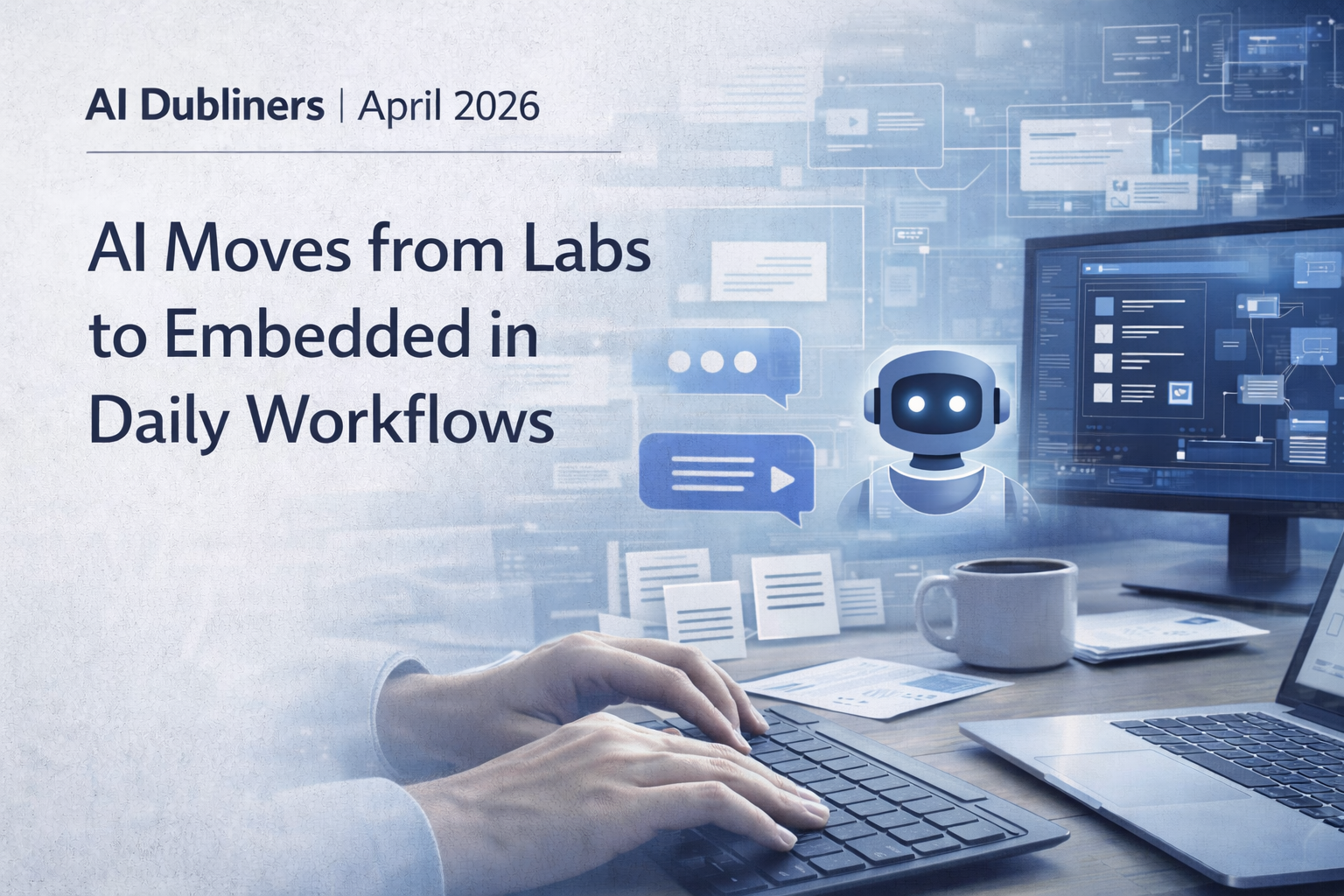
Artificial intelligence is no longer something businesses explore only in pilot programmes or innovation labs.
It is increasingly becoming part of everyday work.
Across industries, AI tools are being integrated into daily workflows to automate repetitive tasks, support analysis, improve responsiveness and help teams focus on higher-value work. From customer support and internal operations to research, reporting and decision support, the shift is becoming more visible across functions.
From standalone tools to embedded workflows
What matters most is not just that companies are using AI.
It is how they are using it.
Many organisations are moving beyond one-off AI assistants and beginning to embed AI into broader systems of work. That includes automation platforms, internal copilots, workflow tools and decision-support systems that help employees move faster and operate with more structure.
This is changing the nature of productivity itself.
Rather than simply reducing time spent on routine tasks, AI is starting to reshape how work is organised, where decisions are made and which tasks require human attention most.
The opportunity and the tension
This shift brings obvious benefits.
Companies are using AI to improve efficiency, reduce operational friction and increase the speed at which teams can process information or complete repeatable tasks. In many cases, that can create more room for strategic, creative or judgment-based work.
But the transformation also raises deeper questions.
As AI becomes more embedded in everyday workflows, organisations will need to think carefully about job design, skill development, role evolution and the balance between automation and human oversight. The future of work is not only about productivity. It is also about adaptation.
Why skills matter more now
One of the clearest signals in this transition is the growing importance of skills.
As AI tools become more common in the workplace, demand is likely to increase not only for technical specialists, but also for employees who can work effectively with AI systems, understand their limits and apply them responsibly inside business processes.
That means reskilling and AI literacy are becoming more important across teams, not just inside engineering or data roles.
What this means for Dublin
For Dublin, this shift is especially relevant.
With its strong technology, startup and business ecosystem, the city is well positioned to benefit from workplace AI adoption across sectors. But that also means local companies are likely to face growing pressure to rethink team structures, skill needs and internal workflows.
The demand for AI-skilled professionals is likely to increase, but so too is the need for managers, operators and knowledge workers who understand how to work effectively alongside AI.
A wider signal
At AI Dubliners, we see this as one of the clearest signs that AI is moving from experimentation into practical business reality.
The next phase of workplace AI will not be defined only by better tools. It will be defined by how organisations redesign work around them.
And for ecosystems like Dublin, that shift is already underway.