Artificial intelligence is no longer only a technical or commercial issue in Europe.
It is now firmly a policy issue too.
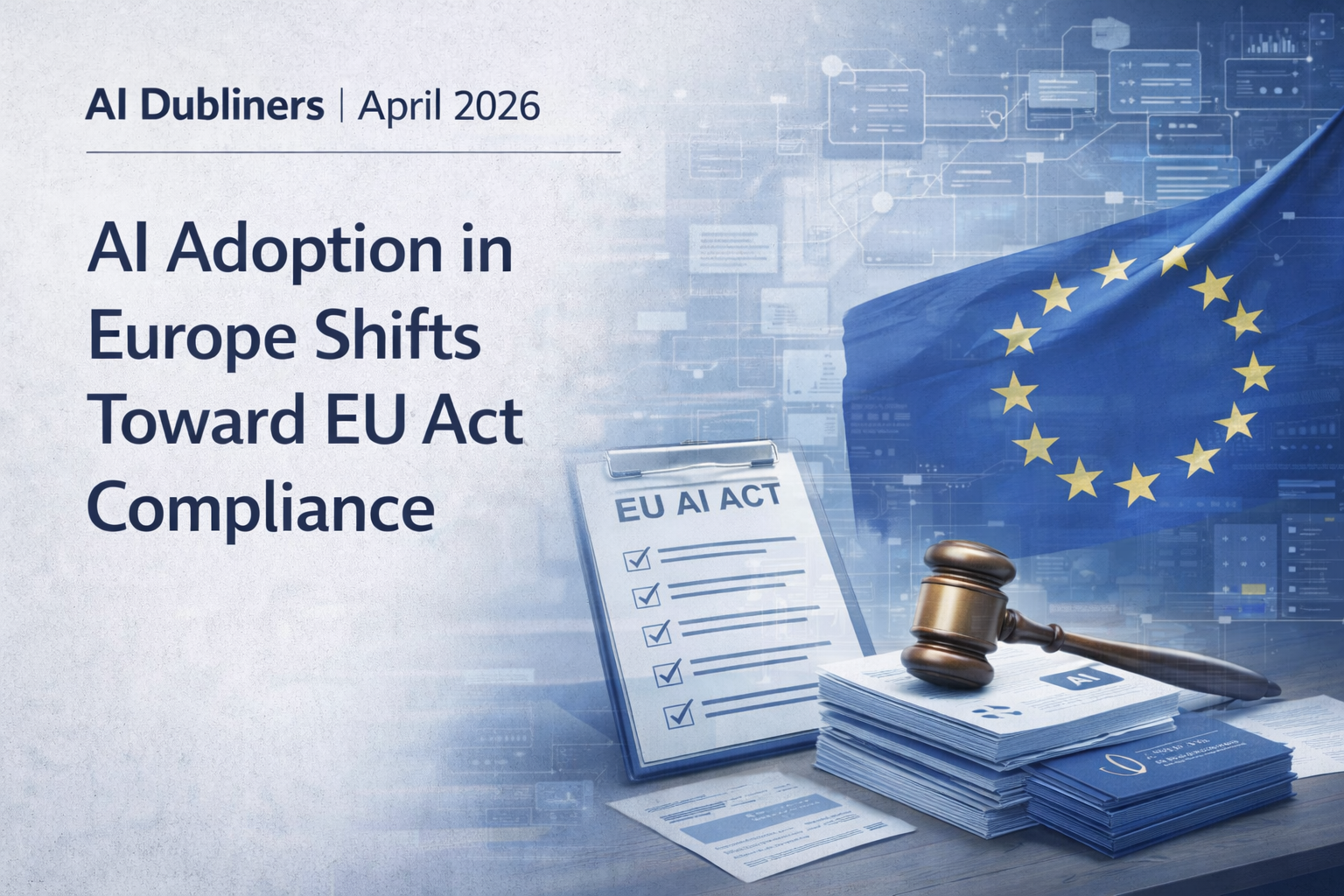
As adoption grows across industries, the European Union is moving from high-level principles toward real implementation of the AI Act. That makes this a significant moment for companies building, deploying or integrating AI into products and workflows across the region.
From regulation to implementation
The EU AI Act is built around a risk-based approach.
In simple terms, that means not all AI systems are treated the same way. The higher the potential risk to safety, rights or public trust, the stricter the obligations become. This is especially relevant in areas such as healthcare, finance, employment, education and public services.
What matters now is that the conversation is shifting from regulatory design to practical compliance.
Under the current implementation timeline, many core provisions of the AI Act are already phasing in, with broader application and enforcement expanding through 2 August 2026, and additional timelines extending into 2027 for some high-risk systems embedded in regulated products.
Why this matters for companies
For businesses, this creates both pressure and opportunity.
Some companies see compliance as an added burden, especially where documentation, governance and technical transparency require new internal processes. But others see the same shift as a chance to build trust earlier and position themselves more strongly in European markets.
That is likely to be one of the defining dynamics of the next phase of AI adoption in Europe.
As regulation becomes more tangible, competitive advantage may increasingly come not only from model capability, but from how responsibly and transparently AI systems are deployed.
A new standard for trust
One of the most important signals here is that Europe is trying to shape AI around accountability, not only speed.
That includes expectations around:
- risk classification
- transparency
- governance
- human oversight
- documentation and compliance processes
Whether companies see this as friction or as structure, the direction is becoming clear: trusted AI is becoming a strategic requirement, not just a policy talking point.
What this means for Dublin
For Dublin, this matters on several levels.
As one of Europe’s most important technology hubs, the city is home to companies building AI products, integrating third-party models and deploying AI across internal operations. That means regulatory readiness is no longer a peripheral issue.
Dublin-based companies that adapt early may be better positioned to build trusted AI solutions for European customers and regulated markets. In that sense, compliance is not only about avoiding risk. It can also become part of the value proposition.
A wider signal
At AI Dubliners, we see this as part of a broader shift in the European AI story.
The next phase of AI will not be defined only by capability or adoption rates. It will also be shaped by how governance, trust and regulation evolve alongside the technology itself.
Europe is making that clear.
And for ecosystems like Dublin, the companies that respond early may be the ones best placed to lead.